Driving engagement for SEEK Public Profiles
About SEEK
A market leader in online employment marketplaces, SEEK has been helping people live more fulfilling and productive working lives and helping organisations succeed for over 25 years.
SEEK operates market-leading online employment marketplaces in Australia, New Zealand, Hong Kong, Indonesia, Malaysia, the Philippines, Singapore and Thailand. Across the Asia Pacific region, in FY25 SEEK managed 360k hirer relationships, ~260m unique candidate visits every year and ~58m applications and talent search connections every month.
Project
Overview
The Profile Experience (PREX) team, focuses on enhancing the user experience for candidates on SEEK. Their mission is to create the most useful career profiles, preferred by hirers, enabling candidates to effectively showcase their skills and experiences. The team is responsible for developing features that help candidates find jobs and stand out in the job market.
My role: Senior Product Designer
Public Profiles allow candidates to be found via SEEK’s People Search and Talent Search function. Letting candidates to be more easily found by hirers, and for candidates to be matched with roles that aligned closer with their experience, skills and qualifications.
I was engaged to create and design a series of experiments to increase adoption of the Public Profile feature by new and existing candidates. The aim of these experiments was to optimise the adoption and experience before implementing a scalable solution.
Responsibilities included:
• Managing communication between engineering, legal and business stakeholders
• Translating business needs into actionable design experiments with clear goals and specifications
• Liaising with broader SEEK teams to facilitate the implementation of experiments
• Facilitation of brainstorming/ideation, design review and presentations
Tools used
Figma, Miro, Atlassian Suite
Timeline
February 2026 – March 2026

Hypothesis statement
‘Public profiles will drive fresh and deep profile data because making profiles public increases candidate awareness of being proactively discovered’
By prompting active, existing candidates to review their visibility setting during their next job application we expect to increase the rate at which Standard/Limited/Hidden profiles upgrade to Public.
Additional assumptions we tested
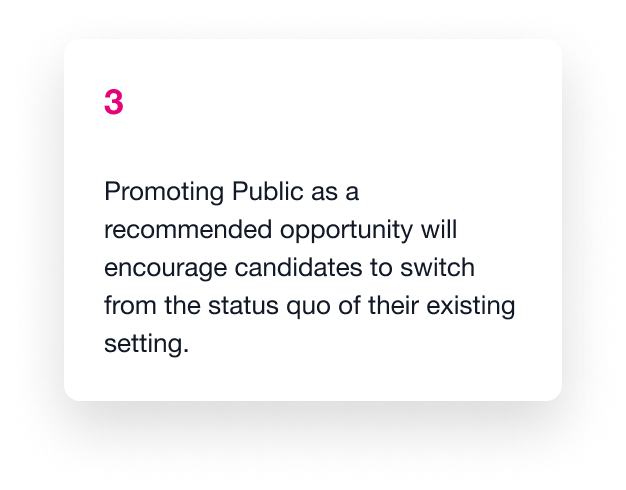
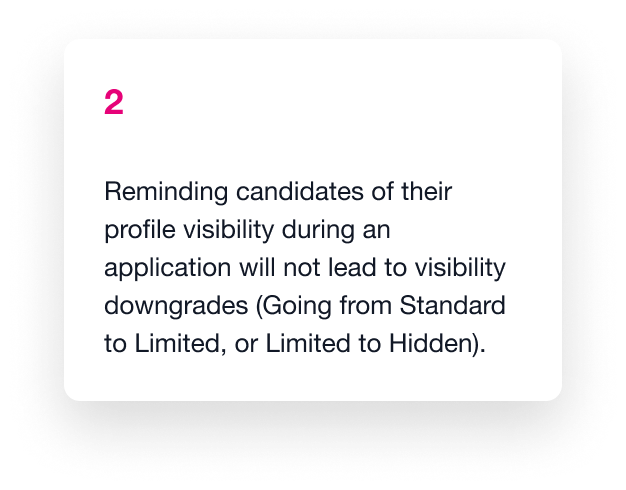
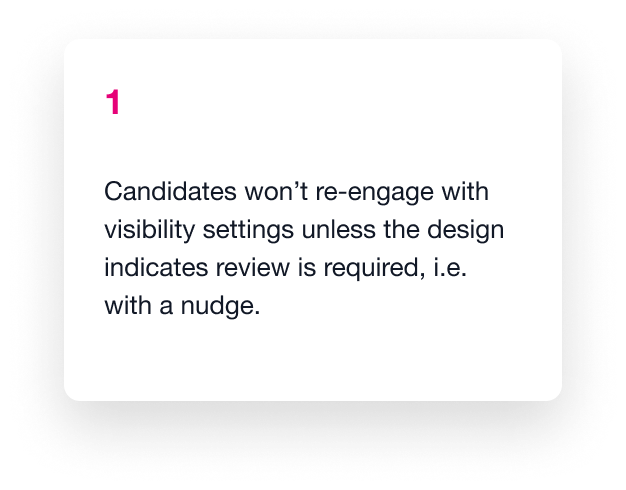

Experiment
Visibility settings in Apply Flow
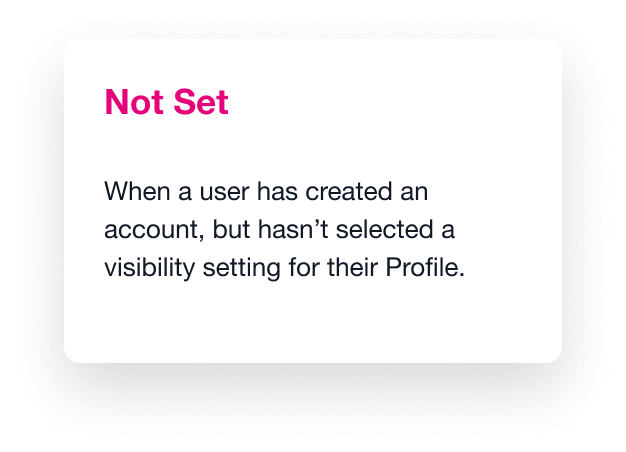
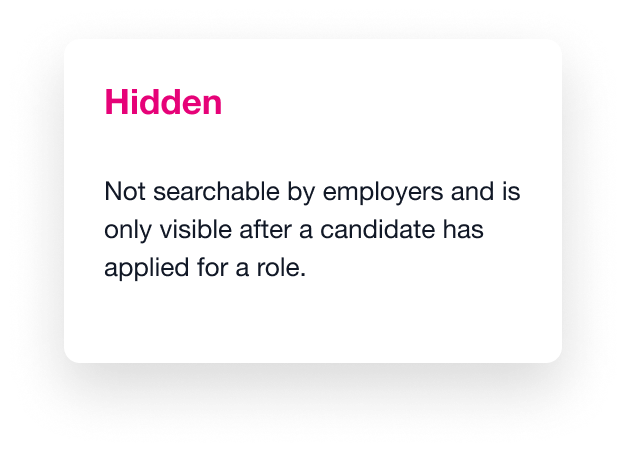
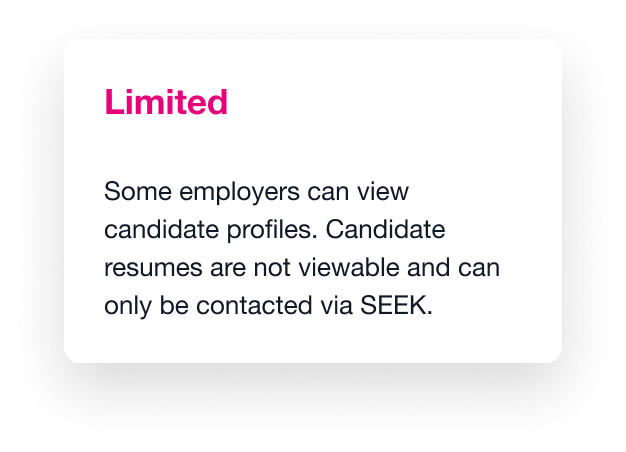
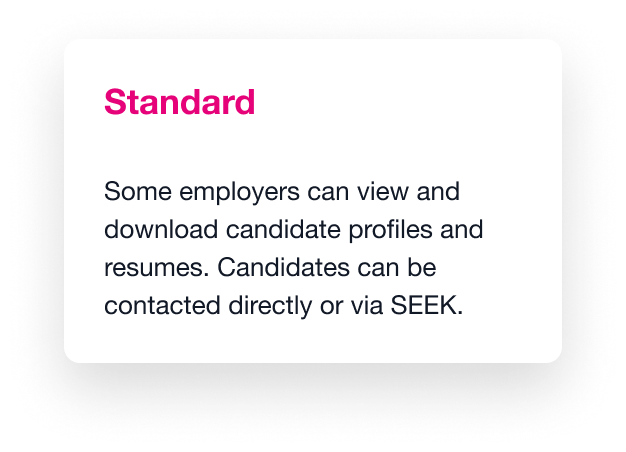
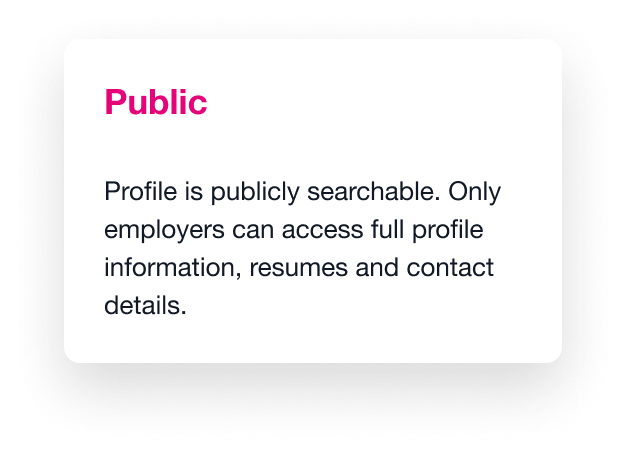
Displaying the profile visibility settings selector in Apply flow for candidates with or without an existing visibility setting. If a profile has ‘Not set’ visibility, it is mandatory to choose a visibility setting in order to submit a job application. If a profile already has a visibility setting selected (Public / Standard / Limited / Hidden) the Apply flow does not provide any opportunity to review or change that setting. The aim was of the experiment was to validate whether candidates are likely to review their existing setting and upgrade it to Public, if given the opportunity to do so in the Apply flow.
Available visibility settings

Metrics and parameters
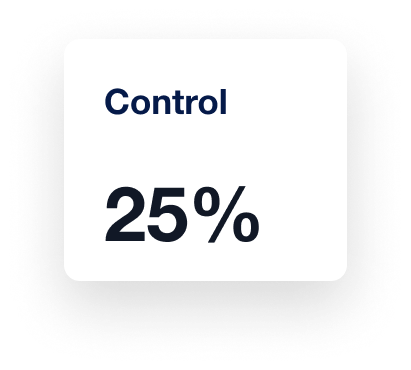
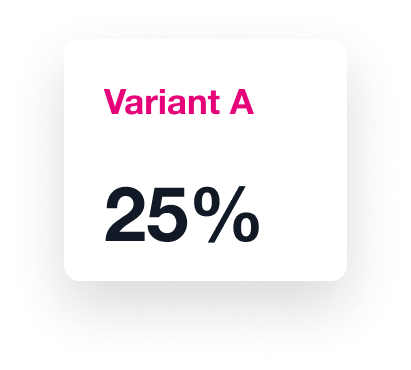
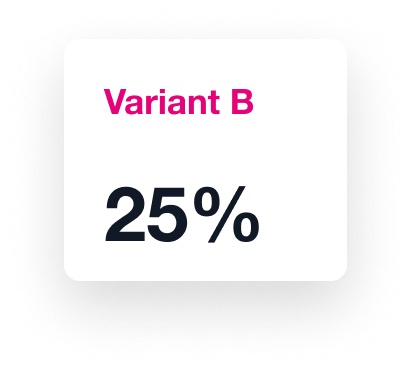
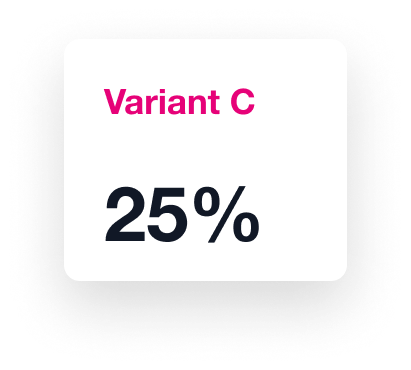
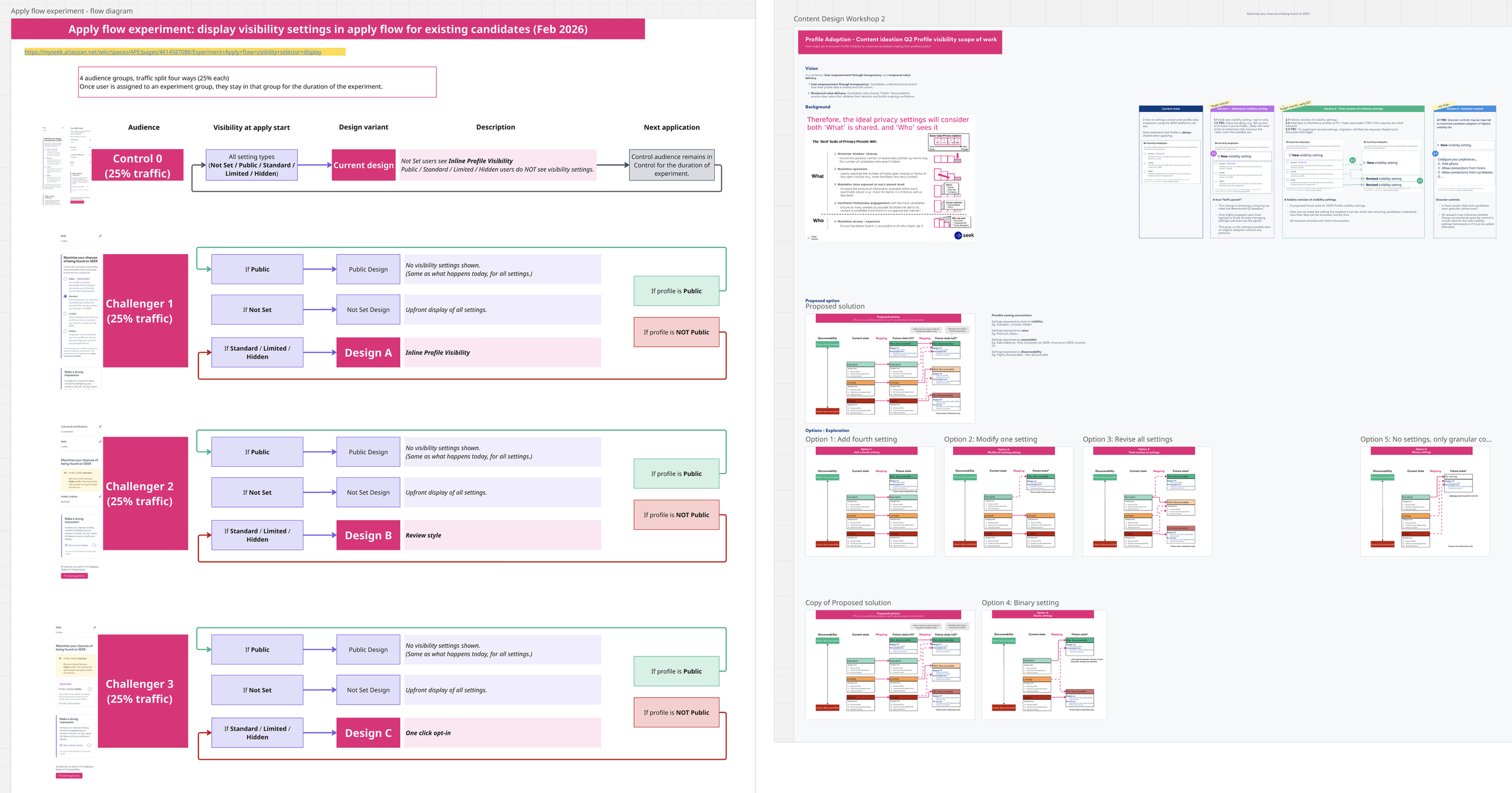
A/B test of series of variants that surface visibility settings to all candidates who are not already Public in the existing Apply flow (job application). Candidates are randomly assigned to assigned to groups:

Methodology
A/B test of series of variants that surface visibility settings to all candidates who are not already Public in the existing Apply flow (job application). Candidates are randomly assigned to assigned to groups:

Getting to work
1 Understanding the landscape
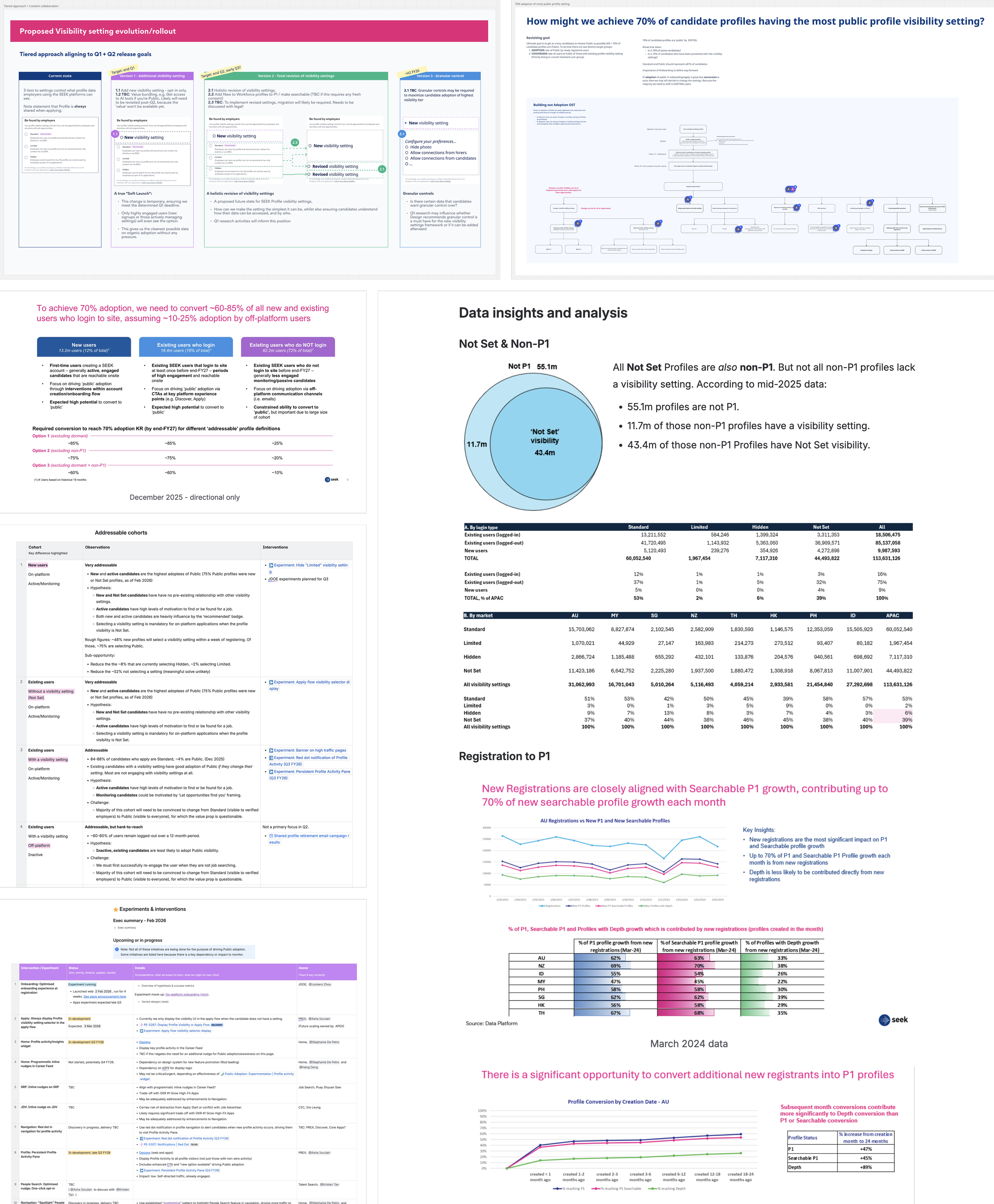
Strategic vision and business goals
Being the first experiment that I worked on for SEEK it was important to understand the larger strategic vision that SEEK had for Profile Experience. Overall, as this would allow this feature to develop and scale with other features being developed and experimented for Public Profiles.
2 Define
Competitive landscape and best practice
Benchmarking against our competitors, identifying where we sat in the market, and what would deliver the most value for our candidates and SEEK. It was great to do this early on to see how this aligned with the Product teams assumptions.
Analysis and user flows
It was important to break down our current user flows (alongside usage data) and analyse how our users discovered the Profile area. It was important in this step to also look to validate our assumptions and hypothesis with both users and technology to ensure viability and feasibility.
3 Ideation
Developing concepts
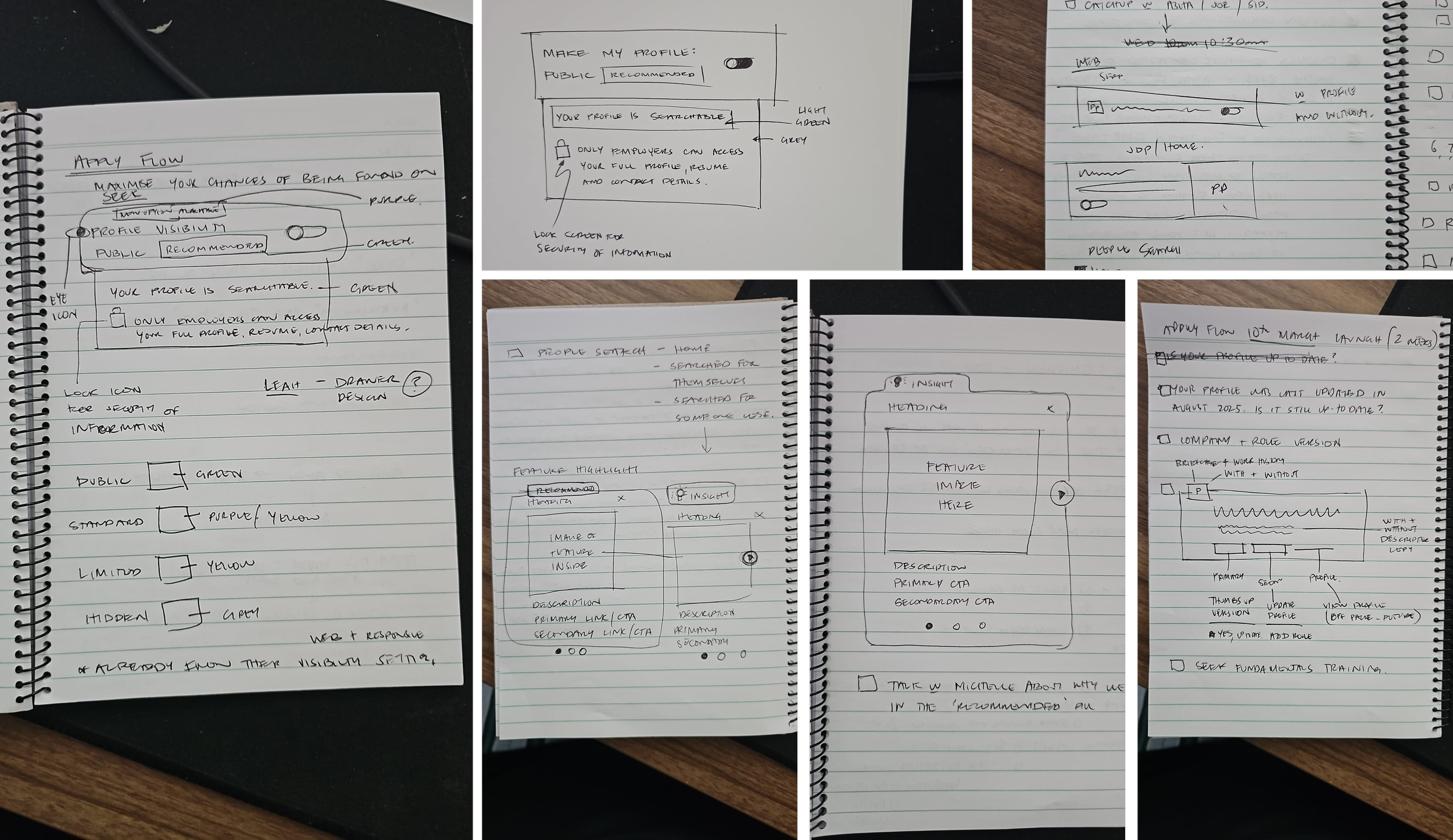
Guided by the above and SEEK’s Braid Design System, I iterated on a variety of design variants that met user and business goals.
Series of early sketches discussed with Design Lead, Project Manager and development team.
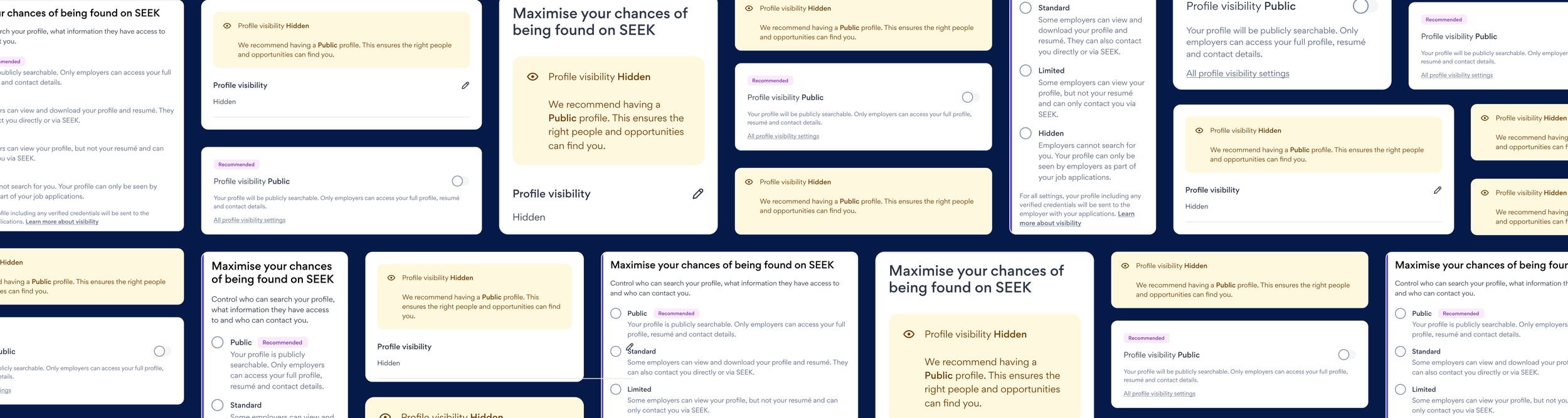
Sample of designs created for review and discussion with design, product and development teams.
Experiment variants
Control and 3 variants

The results
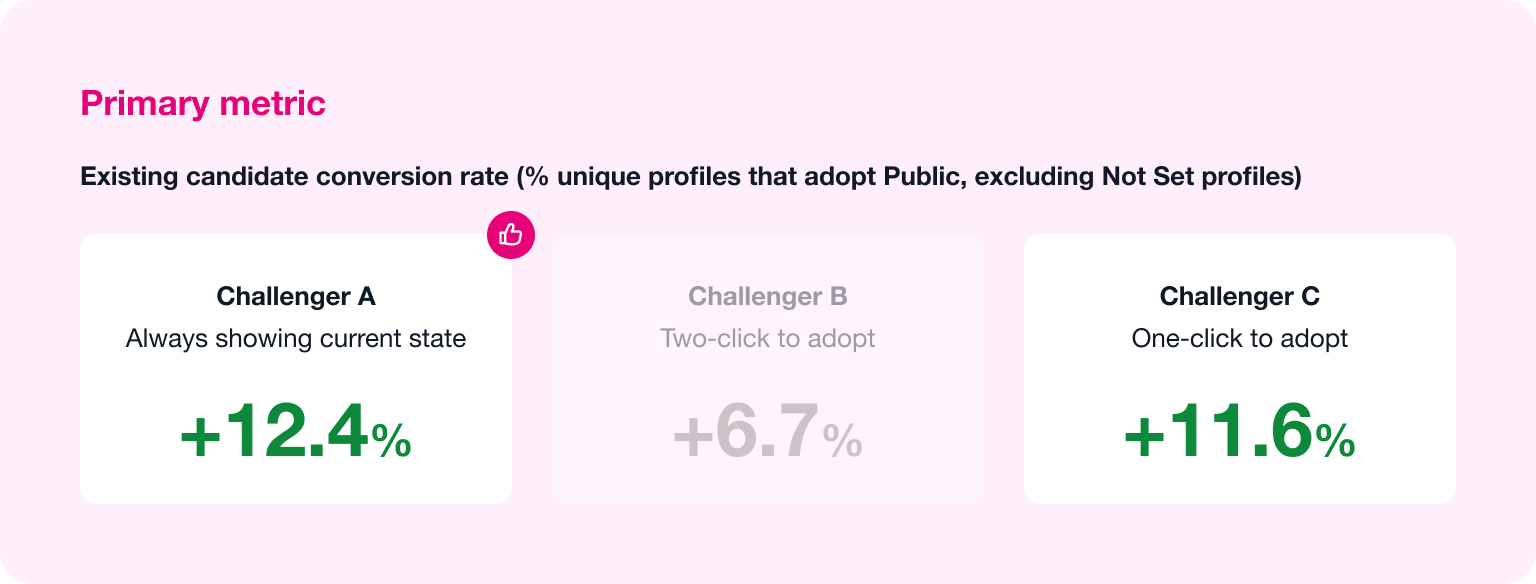
After running the experiment for 3 weeks with 624k applications:
Review, analyse, discuss and decide
Design, Product and the Analysis team analysed and reviewed the results of the experiment.
With double digit increases in adoption, Challenger A and B were the overall winners with the highest percentage of adoption respectively.
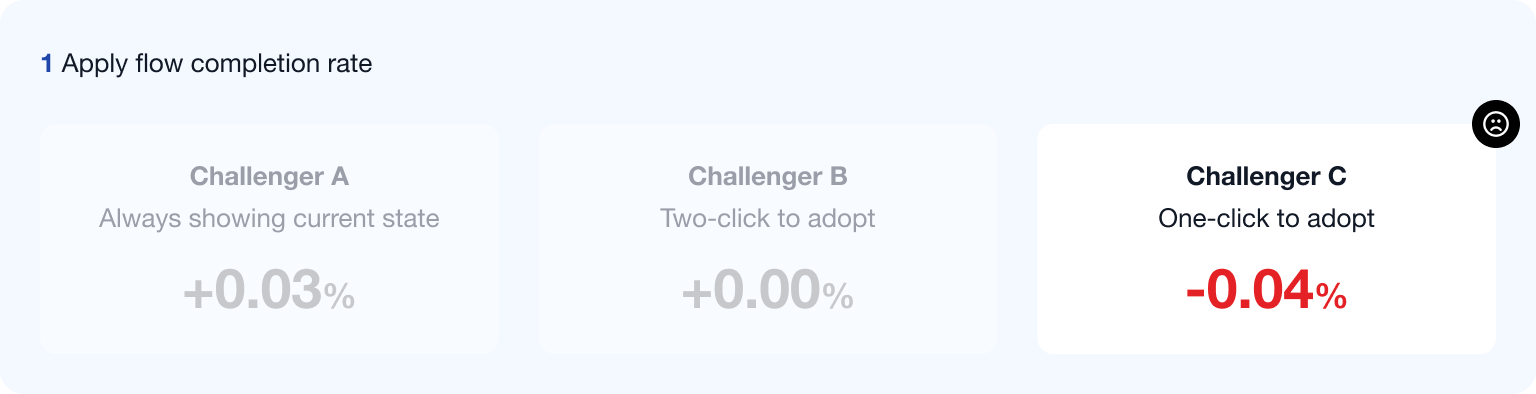
Looking at the some of the secondary metrics it was clear to see that Challenger A was the most successful design in the experiment. Specifically, the ‘Apply flow completion rate’ had a slight drop.